
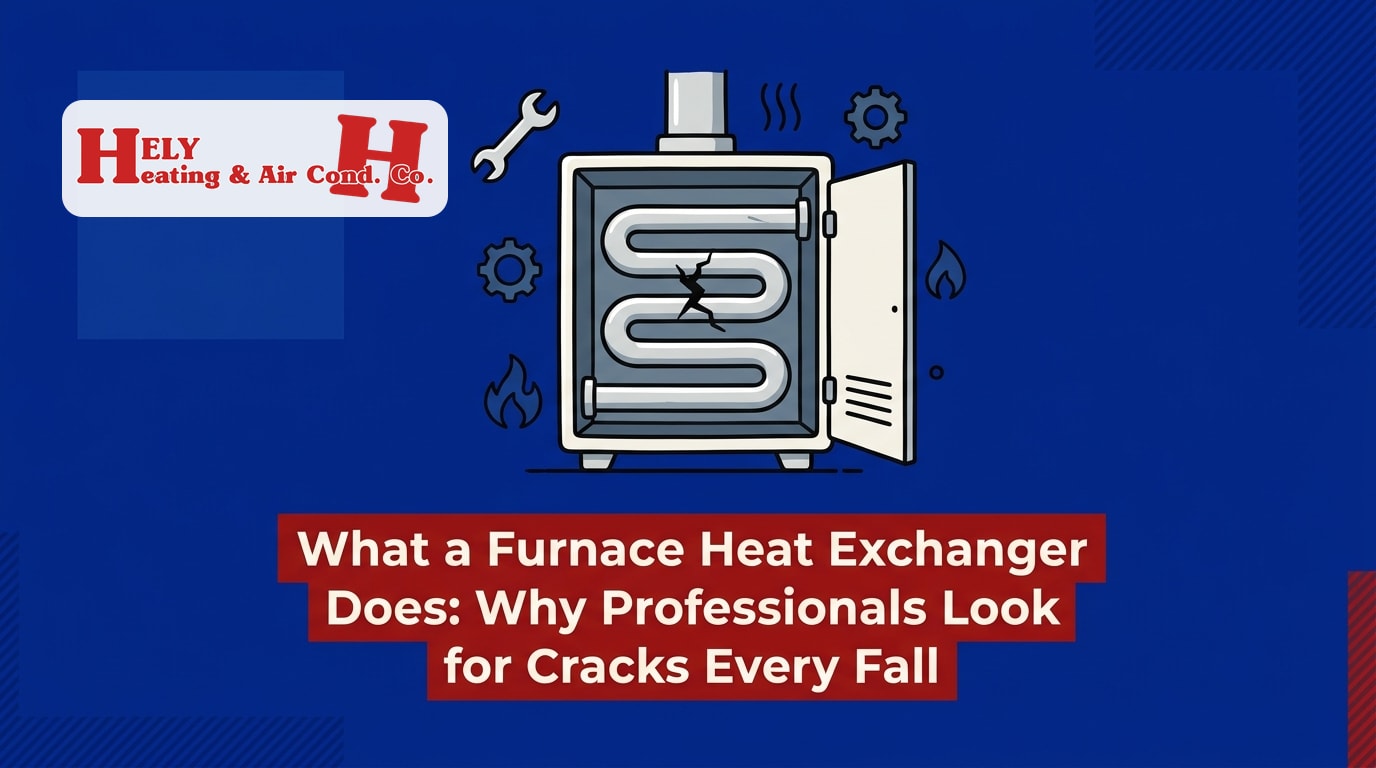
What a Furnace Heat Exchanger Does: Why Professionals Look for Cracks Every Fall
See what a furnace heat exchanger does to block carbon monoxide. Understand why professionals look for micro-cracks before trusting a system this winter.
Your furnace is running for only a few minutes before shutting off, leaving the house chilly—a frustrating scenario where relying on local service expertise and area tips can help you determine if it is a simple filter issue or a serious breakdown. That strange pattern of starting and stopping isn't just an annoyance; it is a clear signal from your heating system that something is disrupting its normal sequence of operation. A house that won't stay warm during the first freezing nights of late fall is uncomfortable, but ignoring the underlying cause can lead to much larger mechanical failures.
If you are transitioning from relying on air conditioning services in the summer to suddenly needing reliable heating, you are not alone in facing these sudden operational hiccups. The sudden transition into November pre-winter temperature drops often exposes latent HVAC issues that went entirely unnoticed during milder weather. When the system is finally pushed to run continuous cycles, minor airflow restrictions or sensor miscommunications become glaringly obvious.
It is important to understand that short-cycling is a symptom, not a normal operational quirk. The furnace is intentionally aborting its heating cycle to protect itself from damage or to respond to confused signals from the thermostat. While some basic checks are perfectly safe and highly recommended for homeowners to perform, other diagnostic steps require the advanced training of a licensed professional. Knowing where to draw that line is the key to keeping your home safe and your heating system intact.
To understand why your furnace is misbehaving, it helps to know how a healthy heating cycle is supposed to work. Under normal conditions, the sequence of operations follows a strict, predictable path. First, your thermostat senses a drop in room temperature and sends a call for heat to the furnace control board. The draft inducer motor kicks on to clear residual gases from the heat exchanger. Next, the igniter glows or sparks, the gas valve opens, and the burners ignite. Once the system confirms a steady flame, the main blower motor engages, distributing warm air throughout your home until the target temperature is reached. Finally, the system shuts down gracefully.
Short-cycling occurs when this process is abruptly interrupted. The system shuts down prematurely, long before the house reaches the temperature you set on the thermostat. Often, this is the result of internal safety mechanisms doing exactly what they were designed to do. For instance, the high-limit switch monitors the temperature of the heat exchanger. If the internal temperature rises to dangerous levels, the high-limit switch will intentionally cut the power to the burners to prevent a fire hazard or a cracked heat exchanger.
Ignoring this behavior is never a good idea. A furnace that constantly starts and stops is enduring immense mechanical strain, which can quickly escalate from a minor nuisance to a complete system failure right when you need heating the most.
Recognizing the difference between a normal operational cycle and a problematic short cycle is the first step in troubleshooting.
• Cycle Duration — Normal Furnace Cycle: Typically lasts 10 to 15 minutes per cycle, depending on outdoor temperatures. — Short-Cycling Furnace: Often lasts less than 5 minutes before abruptly shutting down.
• Temperature Consistency — Normal Furnace Cycle: Maintains a steady, even temperature throughout the living space. — Short-Cycling Furnace: Leaves rooms feeling chilly or creates noticeable hot and cold spots.
• Energy Consumption — Normal Furnace Cycle: Operates efficiently, using the expected amount of gas and electricity. — Short-Cycling Furnace: Wastes significant energy due to the high electrical draw of constant motor startups.
• System Wear — Normal Furnace Cycle: Normal, gradual wear and tear on components over a 15-year lifespan. — Short-Cycling Furnace: Accelerated degradation of the blower motor, igniter, and relays.

The most common, easily fixable cause of furnace short-cycling is restricted airflow, and the leading culprit is a dirty or clogged air filter. Your furnace needs to breathe. The blower motor pulls cold air from your home through the return ducts, pushes it across the intensely hot metal of the heat exchanger to warm it up, and then distributes it through the supply vents. If that airflow is choked off by a wall of dust and debris in the filter, the heat has nowhere to go.
When heat is trapped inside the furnace cabinet, the heat exchanger temperature skyrockets. Within minutes, the high-limit safety switch detects this dangerous spike and immediately shuts down the burners. The blower fan may continue to run to cool the system down, but the heating cycle is broken. Once the furnace cools off, the cycle restarts, only to overheat and shut down again a few minutes later.
Here are the safe steps you can take to diagnose and resolve airflow restrictions:
1. Locate and inspect the air filter: Turn off the power to the furnace at the thermostat and the breaker. Pull the filter out and hold it up to a light source. If you cannot see light shining through the material, it is too clogged for air to pass freely.
2. Replace the filter with the correct rating: Install a fresh filter, ensuring the airflow directional arrows point toward the furnace. Avoid using overly dense, high-MERV filters unless your system was specifically designed for them, as they can restrict airflow just as severely as a dirty filter.
3. Check the return air grilles: Walk through your home and ensure that no furniture, heavy drapes, or rugs are blocking the large return air grilles on your walls or floors.
Addressing these simple airflow dynamics is a core component of routine HVAC maintenance. Catching these restrictions before peak winter demand ensures your system operates safely and efficiently.
Beyond the filter, the supply vents in individual rooms play a massive role in system pressure. Many homeowners mistakenly believe that closing vents in unused rooms will save energy. In reality, closing vents disrupts the system's static pressure. Modern blower motors are designed to push a specific volume of air against a specific amount of resistance. When you close vents, you increase the resistance (static pressure) inside the ductwork. This forces the blower motor to work much harder, reduces the overall volume of air moving over the heat exchanger, and can easily trigger an overheating scenario that leads to short-cycling. Always keep at least 80% of your home's supply vents fully open.
Sometimes, the furnace itself is in perfect working order, but it is receiving terrible instructions. The thermostat acts as the brain of your heating system, constantly reading the ambient room temperature and telling the furnace when to start and stop. If that brain is confused, the furnace will short-cycle.
The simplest issue to rule out is a power problem. If your thermostat relies on batteries, low power can cause the screen to flicker or the internal relays to send erratic, interrupted signals to the furnace control board. Replacing the batteries and performing a quick factory reset is an excellent baseline troubleshooting step.
However, the physical location of the thermostat is often the hidden culprit. Thermostats can only measure the temperature of the air immediately surrounding them. If the device is installed near a drafty window, an exterior door that opens frequently, or directly in the path of a supply vent, it will get a false reading of the home's overall temperature.
Highlighting local climate factors, the sharp, sudden temperature drops typical of the Fenton MO and surrounding St. Louis metro area can cause severe, temporary drafts in older homes. If your thermostat is located in a hallway that suddenly becomes drafty during a November cold snap, it will detect the chill and turn the furnace on. The furnace quickly heats the hallway, satisfying the thermostat in just a few minutes, and shuts off—leaving the rest of the house cold. If you suspect placement is the issue, a professional can help relocate the thermostat or install remote room sensors to balance the readings.
If you have replaced the air filter, opened all the vents, and verified that the thermostat is functioning properly, but the short-cycling continues, you have reached the limit of safe homeowner troubleshooting. At this stage, the problem lies within the mechanical or electrical components of the furnace itself. Hely Heating & Air Conditioning Co. relies on decades of trusted local expertise to provide prompt, accurate diagnostics, ensuring your safety and the reliability of your equipment.
One of the most common mechanical failures is a dirty or faulty flame sensor. The flame sensor is a thin metal rod located right in front of the burner assembly. Its only job is to detect the presence of a flame once the gas valve opens. If the sensor is coated in carbon buildup or dust, it cannot feel the flame. For safety reasons, the control board assumes the flame failed to ignite and immediately shuts the gas valve off within three to four seconds to prevent raw gas from flooding your home.
Another serious issue involves blocked exhaust vents (flues). High-efficiency furnaces use PVC pipes to vent combustion gases outside. If these pipes become blocked by debris, bird nests, or heavy frost, a safety mechanism called the pressure switch will detect the lack of proper drafting and shut the system down to prevent carbon monoxide from backing up into the house.
Finally, the issue might be the size of the furnace itself. An oversized furnace unit generates heat much faster than the ductwork can distribute it. It blasts the house with hot air, satisfying the thermostat almost instantly, and shuts down. This rapid on-and-off cycle is incredibly inefficient and cannot be fixed with a simple repair; it requires a comprehensive system evaluation.
It is vital to draw a hard line between safe maintenance and dangerous DIY repair attempts. Just as you rely on experts for AC repair in Fenton during the summer, furnace diagnostics require certified training.
• High Voltage and Gas Risks: Opening the sealed furnace cabinet exposes you to high-voltage electrical components and combustible natural gas lines.
• Safety Switch Tampering: Bypassing or tampering with safety switches—like the high-limit switch or pressure switch—can lead directly to severe carbon monoxide leaks or catastrophic fire hazards.
• Warranty Voidance: Most manufacturers require proof of professional maintenance and repair. Attempting to clean a flame sensor or replace a control board yourself will likely void the equipment's warranty.
Letting a furnace short-cycle over time is one of the fastest ways to destroy the equipment. A heating system is designed to run in long, steady cycles. The startup phase of any cycle is the most demanding part of the process, requiring a massive surge of electricity to get the blower motor spinning and the draft inducer up to speed.
When a furnace starts and stops constantly, it accelerates wear on every moving part. The blower motor is subjected to continuous electrical spikes, which can degrade the motor windings and burn out the run capacitor. This kind of electrical strain is remarkably similar to the issues homeowners face when troubleshooting AC circuit breaker problems during the sweltering summer months. The constant demand for peak amperage causes wires to overheat and breakers to trip.
Beyond the electrical wear, short-cycling causes a severe drop in energy efficiency. Because the system spends all its time in the high-energy startup phase and never reaches its smooth cruising speed, your utility bills will inflate dramatically.
Most dangerously, repeated overheating events—often the root cause of short-cycling—take a massive toll on the heat exchanger. The metal expands rapidly when it overheats and contracts just as quickly when the high-limit switch cuts the power. Over time, this extreme thermal stress causes the metal to fatigue and crack. A cracked heat exchanger is a fatal flaw for a furnace, as it allows deadly carbon monoxide gases to mix with the breathable air in your home.
Addressing a short-cycling furnace early is the most effective way to prevent total breakdowns during the peak of winter. Proactive care ensures that minor airflow restrictions or dirty sensors are resolved before the system is forced to run around the clock in sub-zero temperatures.
If basic filter changes and thermostat checks do not resolve the short-cycling behavior, scheduling a professional inspection is the next logical step. Consistent, professional care ensures year-round comfort. The technician who resolves your heating diagnostics today is the same expert you will want to trust when you eventually need AC repair in Arnold next cooling season. Establishing a relationship with a reliable HVAC provider means you are never left scrambling for help during a severe weather event.
If your professional diagnostic reveals that the furnace is severely oversized or suffering from a cracked heat exchanger, a full system replacement may be necessary. In these instances, upgrading to a modern, high-efficiency system provides superior comfort and safety. Generic energy rebates or federal tax credits may apply for homeowners needing a full system replacement, making the upgrade more affordable. Always consult your utility provider or a tax professional to verify which general incentives are currently active in your area.
Why does my furnace run for 5 minutes and stop?
A furnace running for only 5 minutes usually indicates an overheating issue or a sensor failure. The most common cause is a clogged air filter that restricts airflow, causing heat to build up inside the cabinet until the high-limit safety switch trips. It can also be caused by a dirty flame sensor shutting off the gas valve prematurely.
Is it safe to run a furnace that short cycles?
No, it is not safe to ignore a short-cycling furnace. While the safety switches are doing their job by shutting the system down, forcing the furnace to continuously overheat and shut off puts extreme stress on the heat exchanger. Over time, this can cause the heat exchanger to crack, creating a serious carbon monoxide hazard in the home.
What causes a furnace to turn on and off constantly?
Constant on-and-off behavior is typically driven by restricted airflow, thermostat miscommunications, or mechanical failures. Dirty filters, closed room vents, dead thermostat batteries, or a blocked exhaust flue can all disrupt the normal sequence of operations and force the unit into a protective shutdown mode.
What should I check before calling a professional for furnace repair?
Before calling a professional, you should always check the easiest, safest components first. Verify that your thermostat has fresh batteries and is set to the correct heating mode. Next, inspect your furnace air filter and replace it if it is dirty. Finally, walk through your home and ensure all supply and return vents are fully open and unblocked by furniture.
Can a dirty air filter cause my heating system to shut down completely?
Yes, a severely clogged air filter can absolutely cause a complete system shutdown. When airflow is completely choked off, the furnace overheats rapidly. If the high-limit switch trips multiple times in a row, modern furnace control boards will often lock the system out entirely for several hours to prevent a fire hazard.
How do sudden late-fall temperature drops affect an aging furnace?
Sudden temperature drops place an immediate, heavy load on a system that has been dormant for months. Aging furnaces with worn blower motors or borderline dirty sensors often fail during this initial stress test, revealing underlying maintenance issues that must be addressed before the deep winter freeze sets in.
A clear, technically accurate diagnosis is the best way to secure your heating reliability for the long months ahead. While replacing a dirty filter or swapping out thermostat batteries are great first steps, persistent short-cycling is a mechanical cry for help that should never be ignored. If your heating system continues to struggle to maintain a consistent temperature, reach out to a local expert for a thorough inspection. Taking action now ensures your home stays safe, energy-efficient, and comfortably warm all winter long.

Building trust, one satisfied customer at a time. Read their stories.

Great experience! Would definitely recommend and will be using/referring in the future.

Wonderful service was here on short notice to help on a really hot day. I will be recommending and using for other properties.
Tim was efficient and knowledgeable. He explained everything he did and what the problems were. I would recommend them.
We have been using Hely for years. Professional, prompt and courteous service.
never have a need to call anyone else, they are the best, also refer a lot of people to them because they know how to treat people and get the job done with top quality service techs and office staff
Very helpful on installing my new thermostat. Assisted in set up too. We’ve used Hely for a very long time and will continue to do so. Have also had new furnace and A/C installed by Hely. Great staff
Amazing Service! They are great! Our AC went out after the 4th of July, and Tim came out that same day to repair our unit. He diagnosed the issue in less than 10 minutes, and had it fixed in less than 5. I am extremely grateful for their great service and quick resolution! I would highly recommend calling them!
Family has been using Hely for years. Always on time, polite, professional. Very responsive and they have an emergency line for when the weather is bad and you need help. Installed a new furnace and A/C for our new house within the last year and we're very happy.
They explained everything in terms that I could understand. The installers were very courteous & did a great job cleaning up. I highly recommend giving them a call.
They always come when called to service our heating & cooling system. Good prices, always fair and friendly service.
Never have a need to call anyone else, they are the best, also refer a lot of people to them because they know how to treat people and get the job done with top quality service techs and office staff
Korky has been working with our family for a long time. He is always so nice and efficient that we usually always hope to get him when we call you guys. He really cares for his customers and is always so professional. I’m really glad you have someone like korky on your team.